Q&a With Satisfy's Chief Brand Officer, Daniel Groh, On Being Right At Home In Any Niche
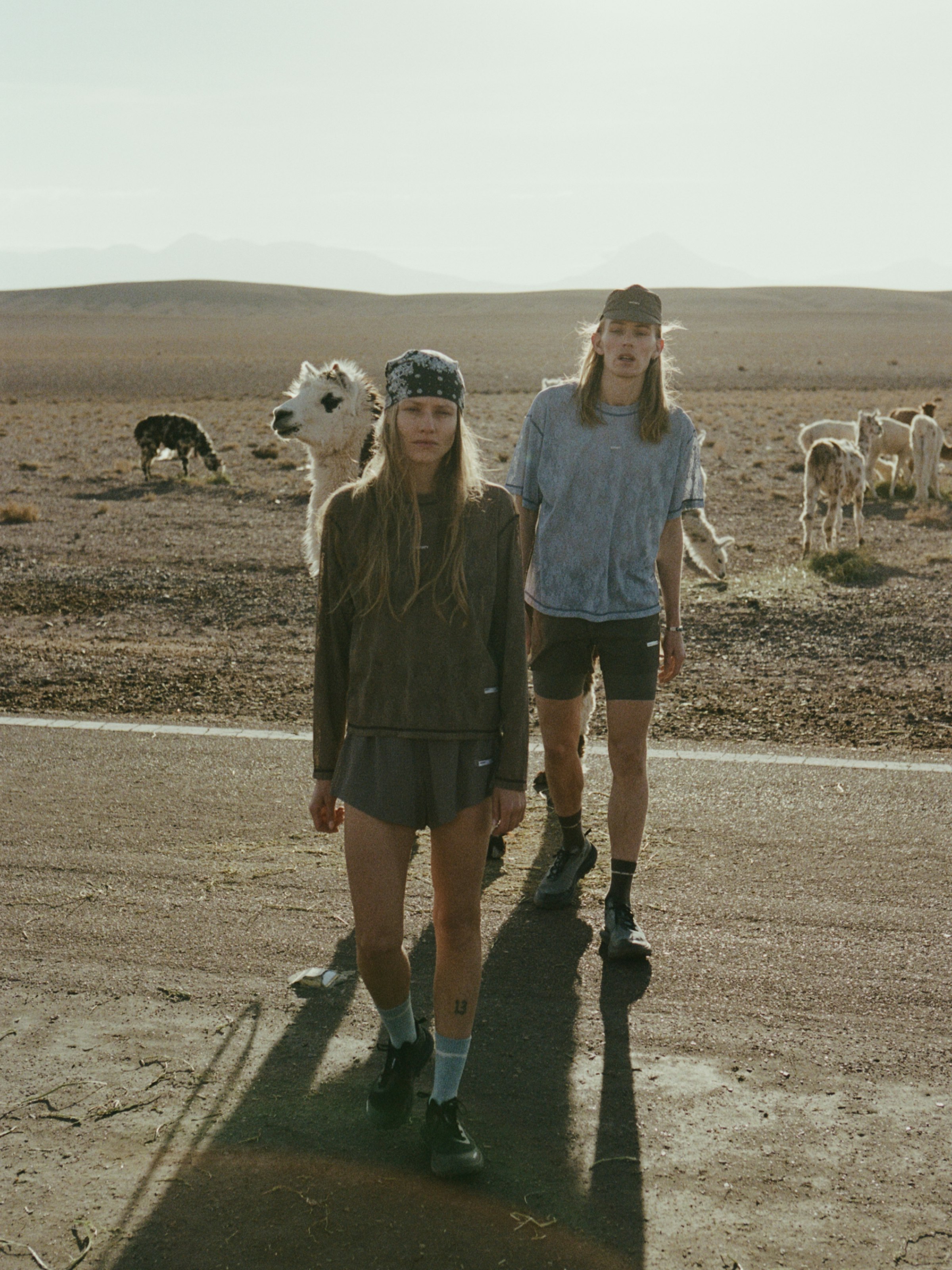
Sports, sports, sports. It’s on our minds, in our feeds, and in our reports. Haven’t you heard? We released a Guide to Good Sports Marketing. But we can’t possibly talk about sports without talking about the sport making (perhaps) the most noise over the past few years. Whether it’s run clubs, the rise and shine of trail runners, or using Strava as a dating app, you really can’t escape running anymore, can you?
But next to Harry Styles, there are other people who made running the cultural powerhouse it now is. Satisfy is one, if not the, brand that has taken over the running space, becoming the force behind t-shirts with holes in them, desert runs, and wearing bandanas around our necks. Satisfy has become such a force that we now know this look by its name: the Satisfy silhouette. So, buckle up and strap in, we’re going to the brand that turned running into something like a scene from Mad Max and became a commercial success in the process (last year, the company secured €11 million in Series B funding led by David Wertheimer, an heir to the Chanel fortune).
Our in-house deep-insight explorer Anna Burzlaff sat down with master of all things Brand (read: Chief Brand Officer) Daniel Groh and dug into the dunes of knowledge.
You know the drill: We have many talents, but keeping the yap short isn’t one of them, so this interview has been edited for length and clarity.


ANNA BURZLAFF: YOU SAID RECENTLY YOU WANT TO REVOLUTIONISE THE OUTDOORS AND FLIP IT ON ITS HEAD THROUGH A PRODUCT LENS, BUT ALSO THROUGH A STORYTELLING LENS. SPECIFICALLY WHEN IT COMES TO STORYTELLING, WHAT DOES THIS LOOK LIKE?
Daniel Groh: What we really want to do is bring a dreamlike sense into the sport.
For the longest time, it's always been focused on competition, it's about achieving something and it's tied to someone winning and someone losing. For Satisfy, it's more explorative. What we've been trying to do over the past 10 years is introduce another type of relationship with running. It can be competitive — we have athletes that do some of the craziest races in the world — but it can also be quite personal, you can create your own identity and relationship to what running can be.
We have a monthly run called the LSD, or Long Slow Distance, which is a format we created as an almost anti-run club. Lots of run clubs are hyper-focused on performance, what we wanted to do was the opposite of that and introduce something that anyone could join. In run club culture, it's very cliquey, almost like high school. LSD was meant to be the antithesis of that.
And then when you look at our content, it's about taking our guests to these far-flung places where you think running could never take place. We’ve been so conditioned to running in the city, in a park, maybe some trail here and there.That’s why we've spent so much time investing in the desert, hopefully creating that mental shortcut: when you think desert running, you think Satisfy.
It’s about extending that relationship beyond the traditional competitive space and bringing it somewhere else, where it feels poetic and romantic. And that really allows you to escape, which is what a lot of people use running for, right? As an escape. We try to add that visual aspect to it.

SO YOU’RE CATCHING UP TO WHERE A LOT OF PEOPLE CURRENTLY ARE IN THEIR RELATIONSHIP WITH RUNNING?
One hundred percent. That was really the reason why Satisfy was born. When Brice [Partouche], our founder and creative director, started running more than 10 years ago, running gear was that tight fitting apparel, very neon. He didn't see himself culturally in that space, so he decided to build Satisfy. That's really what our mission has been to this day, to reflect the cultural influences of the team within.
THE SHIFT AWAY FROM A FOCUS ON PERFORMANCE TO SEEING RUNNING AS A ROMANTIC, AN ALMOST MYSTICAL PURSUIT IS A BIG SHIFT. DO YOU SEE OTHER SHIFTS TAKING PLACE WITHIN THE SPORTS LANDSCAPE THAT SATISFY IS RESPONDING TO?
Yes. The literal sense of the uniform. Before, it was a uniform. Now we're seeing clusters of what that uniform can be, where individualism takes shape. If you look at the bandana around the neck, 15 years ago that never really existed in running, now people love it. Now that's crept into cycling and other sports. The crop fringe shirt, that's something we introduced maybe 5 years ago and has now infiltrated the space.
Obviously while not everyone can afford our products, it's nice to see that what we call the Satisfy silhouette is infiltrating culture, whether or not the individual understands where it came from is not really the point. It's just really nice to see that it sparked this new wave of how people are showing up to run.
So right now it's where you're running, how you're running, what you look like, when you're running, who you're running with. There are so many more signal points that can help form that runner's identity, where previously it was linked to very numerical values.
AND THAT'S ALSO REFLECTED IN THE TALENT AND THE PEOPLE THAT YOU USE IN YOUR CAMPAIGNS, RIGHT?
What's really interesting about our athlete programme is that we look for a very strong cultural fit, but also very interesting narratives. For Max [Jolliffe], for example, who's been one of our longest athletes, running has been his escape from drugs and alcohol abuse. It demonstrates his growth from someone that never used to run and now is doing 400-kilometre races.
Or Stian [Dahl Sommerseth], he’s very romantic in his approach. Scandinavian. Very sensitive. Normally athletes don't like to share when they've failed or when they've made mistakes, Stian's the opposite. Whether he finishes a race in first place or DNFs [Did Not Finish], he's always happy to share that story. We're allowing our athletes to be personifiers of the values that we have at Satisfy.
WHICH BRANDS WOULD YOU CONSIDER PART OF YOUR COMPETITIVE SET?
There are complementary brands from the fashion world and then direct competitive brands. I don't think anyone does exactly what we do. There are attempts to do what we do, but there's no direct competition in the world that we've built.
WHAT ARE YOU BENCHMARKING YOURSELVES AGAINST, THEN?
We benchmark ourselves against the stories we want to tell. You can look at it like an imaginary packing list, and we are constantly developing against it depending on where we want to take ourselves in the world.
WHY DO YOU THINK THAT SOMEONE WHO'S JUST RUNNING 5K IN THE CITY WOULD WANT TO SPEND SO MUCH MONEY ON A PAIR OF RUNNING SHORTS?
We look a lot at fashion because all of us are one foot in, one foot out of the fashion world. If you look at the brand Auralee, you could find everything from that brand at Uniqlo, but it's the ability to be able to talk about it and have that cultural knowledge behind it that matters. The guest [the Satisfy consumer] is someone who wants to be able to talk about the piece. That it looks and feels different. To be able to say, this is Satisfy, this shirt is made in Japan, this brand talks about trail running in a different way. It's a mix of product truth, and that cultural storytelling layer.
It's really interesting for us to see what lands with the guest. We've decided to take a strategic pivot into full true storytelling this year. Every piece of content that you'll see is anchored in a real moment, whether it's a cultural moment that exists in running like a race or a cultural moment that we decide to create. Nothing will be fake this year. All of our authentic moments, a race report or a recap of an event or UTMB [Ultra-Trail du Mont-Blanc], those posts have overindexed in terms of performance and engagement. So this year we're doubling down on that.
If we tell the story of Stian not finishing his race because he's gotten cramps two kilometers from the finish line, there's empathy. Or if we share that after not finishing the race last year, Max wins the race this year, there's triumph. If we say that we took our athlete team to the Atacama Desert and they were there exploring and seeing how far they could go, there's curiosity and excitement.
What we found is that true emotional response comes from true storytelling, it unlocks that true feeling of “Wow, this is cool” or “I'm learning something.” We want to create that deeper sense of emotional connection.

I LOVE THE LANGUAGE AROUND THIS DREAMLIKE WORLD AND THE IDEA THAT RUNNING SHOULD BE ROMANTIC. WHERE DID THAT COME FROM?
It's really been our personal response to running. I hated running; for me, running was always like PE class, doing the mile run and dreading it. Coming into Satisfy and stepping into a world where running could at times be in solitude, to find peace, go far into nature and be awed by it — I think that romantic response is how we as individuals and as a collective built that relationship with running, and Satisfy is the vessel for us to express that to other people.
So, we don’t have a traditional creative brief when we talk about campaigns. We look at stories that we've heard or books that we're reading at the moment, whereas at a bigger corporate entity, it's like “here's the product truth, what's the story behind it?” We find stories of runners and then make sure that our products do justice to those stories versus the other way around. For us owning the stories and then knowing what's credible for us has always been really helpful.
HOW DO YOU FIND THE STORIES? OR DO THEY COME TO YOU?
It's a bit of both. We meet people because they come to a race that we host, and a lot of it comes from literature and a lot of photography. Some of the stories come to us and some of the stories we go find, but that's the beauty of it because then we really can shape and create the narrative around it. And then some of the stuff is inspired by the past, like with some work that we're gonna be doing with Levi's and adidas this year.
WITH YOUR WORK WITH LEVI'S, YOU’VE TALKED ABOUT HOW IMPORTANT THAT WAS TO MAKE THAT PRODUCT CREDIBLE IN YOUR WORLD. HOW DO YOU APPROACH BRINGING NEW PRODUCTS OUT AND MAKING IT FEEL CREDIBLE?
I said any brand can own any space in a matter of 18 months, right? It's about knowing how to then seed that idea over 18 months. So then when you drop that big bang, it feels credible. We knew that we wanted to own the digital denim space because it was something that hadn't really been done in trail running.
The Easter egg is that Brice previously came from denim at his previous brand. His family has a whole legacy in denim, but then for the end guest that wasn't obvious, right? And we can’t just say we're dropping it because our founder used to work in denim, that’s a cheap cop-out.
We wanted to make sure that we're building that story and legacy in a way that felt natural. We started operating in the desert space in 2020, and Levi's came up as a natural conversation to expand what was the early beginnings of our climbing line in an unconventional way but still anchored in product truth. Not many people know, but in the ‘70s there was this group [of counter-culture rock climbers] called the Stonemasters who wore Levi's, so we used that product history to make both the Levi's project and Satisfy in the denim space credible. Then we were able to be associated with denim, and that's when we introduced the peashell denim. So it was a continuation and almost step-by-step build of how we wanted to make sure that that product felt natural to the Satisfy universe.
DID YOU MENTION THAT YOU'RE STARTING A CLIMBING LINE?
We did a climbing line, and then it was on pause, but it does come back with Levi's this year.
A couple of years ago we wanted to do climbing capsules, they were just sporadic. But basically what we had spent the last 10 years doing in running, encouraging people to spend more, spend better, and create that kind of universe, we realised we had to do again for climbing. So we decided to pull back, pause, and really focus on running. But climbing will come back.
Satisfy guests are truly outdoors people. Running just so happens to be the practice that our brand operates in, but our guests go bouldering, they go fastpacking, they go skiing. And Satisfy has a role to play in all of those stories.
© Satisfy